Key points
- Newcastle disease is a highly contagious viral disease of birds caused by a paramyxovirus.
- The incubation period is 2 to 15 days, and a whole flock is usually infected within 3 to 4 days.
- Ostriches are relatively resistant, but chicks under 9 months are more severely affected.
- There is no specific treatment; vaccination and hygiene are the most important preventive measures.
- Twisting of the neck and inability to hold the head up are characteristic signs.
Cause and transmission
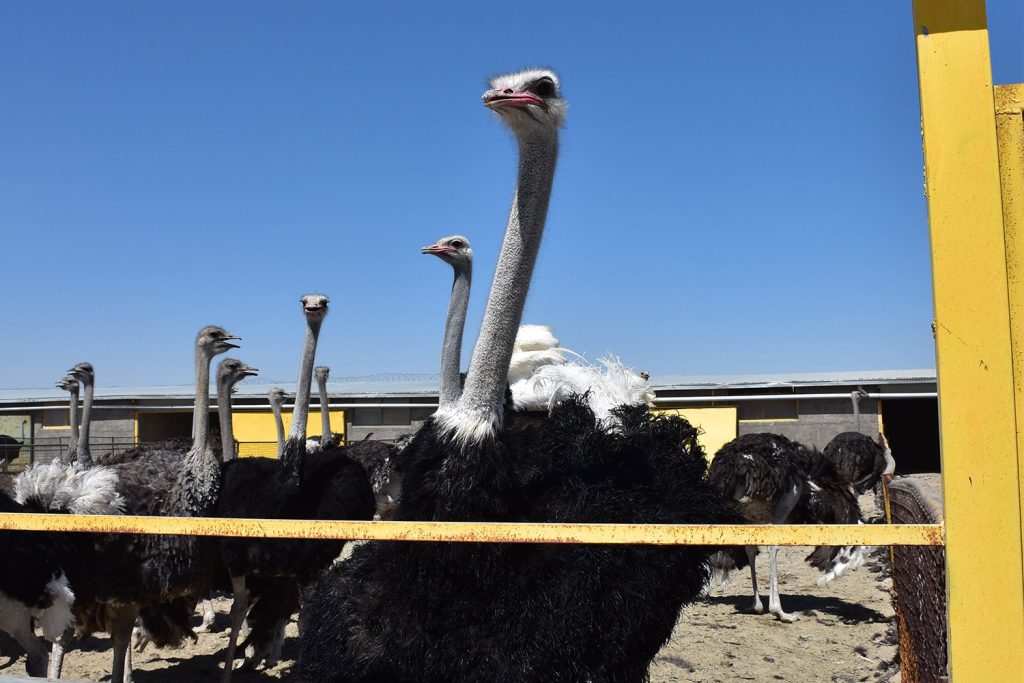
Newcastle disease is a contagious viral disease that occurs mostly in birds kept together in groups, including chickens, turkeys, ducks, geese, pigeons, wild and captive birds, and ostriches. Ostriches suffer from many diseases like other birds, but their strong natural resistance means fewer of them are affected.
The virus spreads through:
- wild and migratory birds such as pigeons, crows and sparrows;
- an infected poultry farm near the ostrich enclosure;
- contaminated water and feed;
- droppings and secretions of infected birds (nose, mouth and eyes);
- workers, equipment and vehicles associated with poultry farms;
- contaminated air and the breathing of infected birds, though not over long distances;
- sharing feed with wild birds and unwashed drinkers and feeders.
The virus usually survives no longer than 30 days in the environment, but in warm, humid conditions it can remain alive for several weeks on feathers and droppings. Recovered birds are not considered carriers. Humans are not normally affected, but people in direct contact with infected birds may develop a short-lived eye infection that resolves without treatment.
Signs and diagnosis
Birds usually hide signs in the first few days, so close observation is the best way to recognise the disease. Common signs are:
- nasal and eye discharge, excess mucus in the trachea and rapid panting;
- loss of appetite, thirst and changes in the colour and consistency of droppings (green diarrhoea);
- lethargy and exhaustion;
- nervous signs: twisting and bending of the neck, inability to hold the head up, tremor, flaccidity or stiffness of the muscles up to paralysis of the legs, convulsions and finally death;
- a drop in egg production in laying birds.
The acute form can be diagnosed to some extent from clinical signs and post-mortem findings, but the chronic form is often mistaken for other respiratory diseases because the signs are similar. The speed at which the disease spreads is the best guide to diagnosis. At post-mortem, swelling of the respiratory mucosa, inflammation and bleeding of the digestive mucosa and cheesy material in the trachea may be seen.
Severity in ostriches
In ostriches Newcastle disease affects the muscles, nerves and skeleton, and attacks chicks younger than 9 months. In chicks of 3 to 4 months it causes about 80% or more mortality. If it appears in adults, the flock must be culled promptly.
Treatment
No specific treatment has been found so far, but consulting a veterinarian and using a suitable antibiotic can, to some extent, prevent secondary infections. Affected birds should be separated and cared for in a separate area, and suspected cases quarantined immediately. Ostriches with a strong immune system recover after several days, but nervous signs may persist and change the bird’s behaviour.
If the bird can still eat grain, use tonics and protein supplements; otherwise offer grains such as mung bean, millet and wheat.
Prevention and vaccination
- Keep ostriches away from wild birds and do not let them share feed; never give contaminated water or feed.
- Wash drinkers and feeders before each feeding, and place feed and water where other birds cannot reach them.
- Keep the bedding clean (sawdust or soft shavings) and change it every few days.
- Strengthen immunity with a strong diet rich in vitamins and minerals.
- Rear chicks in a closed, controlled area until 2 to 3 months of age, then move them to pasture.
- Identify and quarantine lethargic birds early; this limits involvement of the whole flock to some extent, but is not enough to stop the virus spreading completely.
Vaccination is one of the most reliable preventive measures, and the La Sota vaccine is among the best-known ostrich vaccines against Newcastle disease. The first dose is given at 10 to 14 days of age as an eye drop, and the second at 3 to 4 weeks as a subcutaneous injection in the neck (1 cc). The vaccine can be given in three ways: as drops, as a spray in the place where the birds are, or dissolved in water at 6 to 15 degrees and poured into the drinkers.
Conclusion
Newcastle disease is highly contagious and has no specific treatment. Careful monitoring of the birds’ physical condition and behaviour, prompt quarantine of suspected cases, good hygiene and timely vaccination are the most effective ways to limit losses.