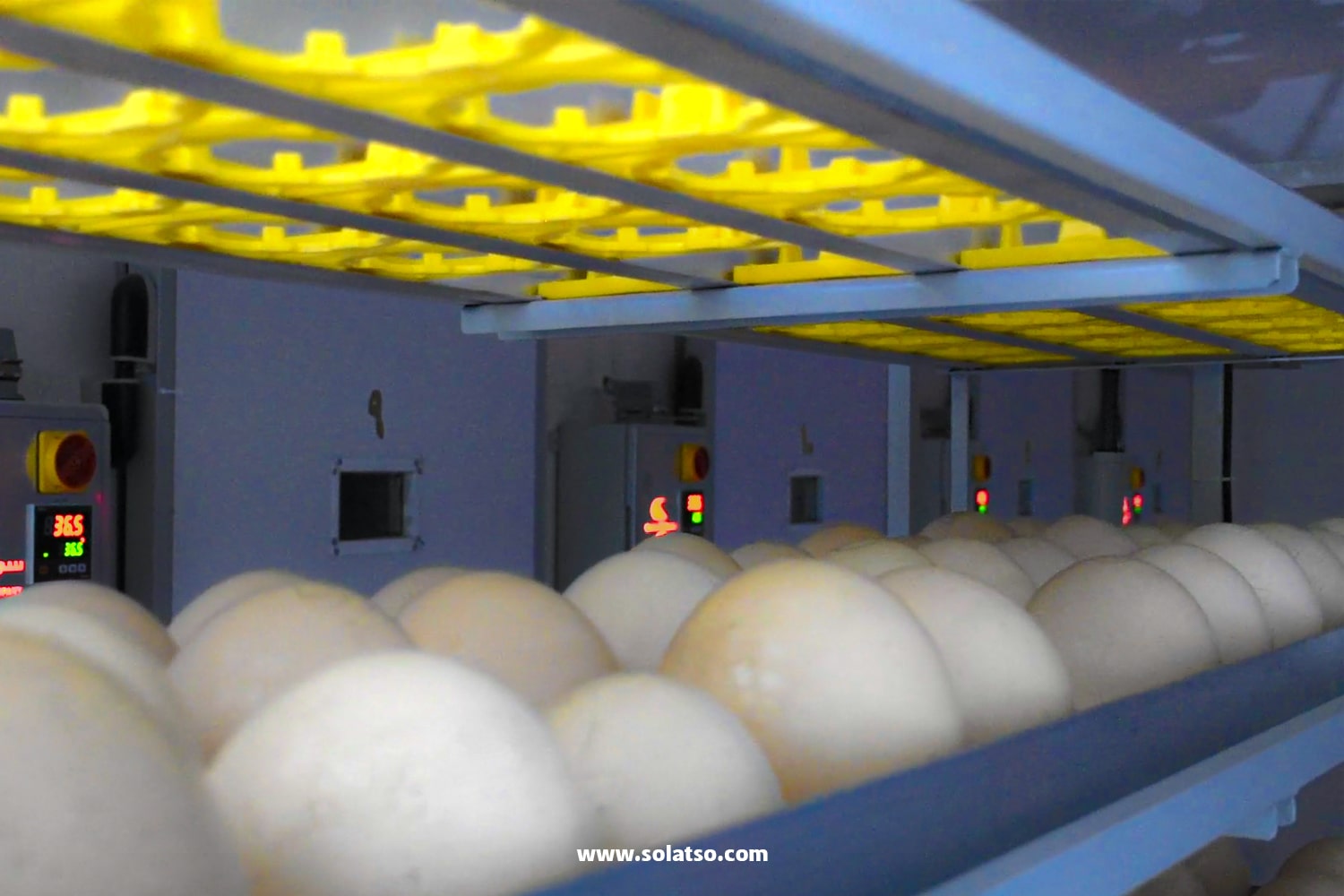

If ostrich eggs are not cleaned properly, it will not improve the hatch rate or chick yield, and it can even let bacteria into the egg and lead to embryo death and yolk sac infection. The golden rule is: collect eggs quickly, clean them dry and gently, maintain good hygiene, and avoid washing.
What to Do
- Collect the eggs quicklyOn hot days, collect eggs about 10 to 15 minutes after laying so the shell surface has time to dry. If eggs stay in the nest overnight, they cool down and get covered with dew or rain by morning, which gives bacteria a way into the shell.
- Hygiene of hands and carrying equipmentWash your hands thoroughly or use sterile disposable gloves. The basket or carrier used for the eggs (usually foam with separate cavities) should be lined with a disposable paper towel to prevent further contamination of the shell.
- Dry cleaningGently wipe dirty eggs with a soft brush or a clean, dry cloth. Using alcohol is not recommended.
- Take nest hygiene seriouslyAs far as possible, keep laying nests away from feeding areas and places where birds gather, and change the nest bedding regularly or add clean sand to it. In rainy weather, add more sand so eggs do not come into contact with water and mud.
- Disinfection with formalin and potassium permanganate (fumigation)Eggs should be fumigated in a dedicated room or cabinet as soon as they arrive at the hatchery, while they are still warm. Dosage: for each 1 cubic metre of room volume, 40 millilitres of concentrated formalin (40%) and 20 grams of potassium permanganate are needed. Close the cabinet door and wait 20 to 30 minutes, then ventilate the gas.Note: Eggs that are already incubating cannot tolerate this type of fumigation; it is only permitted before the eggs are placed in the incubator
- Storage and pre-warmingThe ideal storage temperature is 15 to 20 degrees Celsius with 75 to 80 percent humidity. Eggs should be stored for at least 2 and at most 7 days (storing for less than 2 days or more than 7 days reduces the hatch rate). Gentle pre-warming (4 hours at 36 degrees, or bringing eggs to 25 degrees one day before setting) can also reduce embryonic mortality and prevent condensation on the shell surface.
- Monitor and remove suspect eggsDuring candling, remove infertile or contaminated eggs; a contaminated egg can be a source of infection for the other eggs in the incubator. Unfortunately, many farmers keep the removed eggs inside the machine until the end of the incubation period.
What Not to Do
- Never use a damp or wet cloth to wipe eggsThese cloths collect and spread contamination, and moisture is a route for bacteria to enter.
- Avoid washing or soaking eggsUnlike hen eggs, ostrich eggs do not have a significant protective cuticle layer (wax/mucus). So if an egg is washed, the liquid is drawn into the shell by capillary action and carries surface bacteria inside.If you have to wash very stubborn stains, only use very warm water or solution at 40 to 45 degrees, but the reliable method is dry cleaning
- Do not put contaminated or cracked eggs into the incubatorThese eggs can be a source of infection for healthy eggs.
- During fumigation, do not pour formalin over the crystalsTo produce formaldehyde gas, first pour the liquid (formalin) into the container and add the permanganate crystals at the last moment. Pouring formalin over the crystals can cause an explosion and splashing of the material toward the operator.Formaldehyde gas is highly toxic and irritating; be sure to follow safety and ventilation precautions